


Finding the Next Steve Jobs: How to Find, Keep and Nurture Creative Talent
Posted by
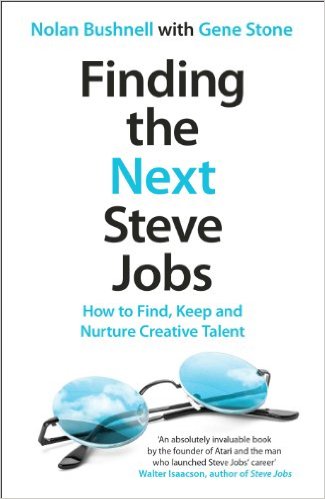
Published first in 2013, then in paperback in 2014, “Finding the Next Steve Jobs” by Nolan Bushnell with Gene Stone is a great read. Bushnell is one of the mentors and inspirers of the late Steve Jobs and in this book, he offers a business leader’s insight into Talent Management. It is short-chaptered, fast paced and packed full of great ideas and tactics that the author has applied to the multiple organisations he has successfully led. Our review offers an overview of the book and a précis of some of its most interesting key points.
In a news article over the last week, Richard Branson freely admitted that he would be a difficult employee to manage. Speaking to the BBC, this wealthy and well known entrepreneur said that if he were a member of staff at another business, his line manager would have to “accept that I might not do things exactly as he’d like me to do them.” He continued with the line that stuck with me, “If you don’t deal with me well, I’m going to go off and set up my own business, and I’ll end up competing with you.”
That message takes us to our latest book review: ‘Finding the Next Steve Jobs: How to Find, Keep and Nurture Creative Talent” by Bushnell & Stone.
Bushnell, one of the mentors and inspirers of the late Steve Jobs, offers a business leader’s insight into Talent Management. Bushnell is an entrepreneur, innovator and business leader who has formed and invested in a range of organisations including the Atari Corporation and Chuck E Cheese. His perspective on talent comes from practical experience and application. In the vernacular, he cuts through the crap and provides an abundance of tactics that have worked for him.
Two excerpts from Bushnell’s book frame his overall thinking. He firstly comments, “You might find that the next Steve Jobses are already working for you” and then that, “[It is] not enough to find them and hire them; you have to create a situation where they flourish, and then your company can too.” Ostensibly aimed at the talent management of creatives, the book has a lot to teach about the general principles we need to identify and nurture talent.
This book is worth reading for the anecdotes alone, but there were some stand out points that are important for us to note:
Set up the right environment for talent. You can spend time finding talent, but it is better for talent to find you. If you want creative people for example, demonstrate creativity as an organisation and your reputation will do the work for you. Bushnell held weekly ‘beer busts’ while at Atari for existing staff to unwind at the end of the week; he invited anyone he was thinking about getting to join the business so that they could see the culture at work. How can we help people see that we are a great place to work?
Search for the right things from people. Talented people don’t always fit a ‘mould’. Bushnell’s view is that we need to go out of our way to embrace diversity of personality and to avoid homogeneity. He goes further suggesting that it is not a bad thing to ‘embrace minor insanity’ – particularly amongst creative people. In his experience finding passion and intensity can often be coupled with crazy, fun and off the wall thinkers who will shake up and move the organisation forward. Encouraging and certainly something that happened to me personally, was that he likes to find people who are in really dull jobs, but are doing them really well. For him, it was a sign that they would do even greater things when they were exposed to more challenge.
Use the right selection approach. Bushnell is an advocate of finding innovative ways of selecting people that challenge and go beyond the norm. As well as some more ‘out there’ ideas like using a sailing trip as an assessment centre, he is keen to ask very challenging questions in interviews. He opines that interviews too readily let people off the hook by accepting superficial answers. The book contains some very off the wall interview questions that despite my experience, I think I would find hard to answer!
Make sure you properly treat them in the right way. There were a number of things at the top of the author’s list: create fun at work, celebrate success, create fairness by sharing credit and ideas, force teams to work together so they rely on each other, treat people like adults, take time to talk to them and understand them – and allow freedom by stopping murdering great ideas! Hold haphazard holidays – make up a reason to give people unexpected days off that will refresh them, and their thinking.
Develop them so that you can get the best out of them. He used a range of development options to great effect. Mentoring was high on the list, something that he offered to Jobs and enjoyed. The next was allowing people to fail and not punishing them for doing so, but encouraging them to learn from it – all innovation builds on trying things out to find something that works. Helping people to change their frame of reference so that they see things from a different perspective – allowing them to work odd hours, allowing them to personalise their office space. He tells the story of how much happier Jobs was when there was somewhere in the office he could go to sleep! Finally, the author is a strong advocate of ‘back to the floor’ programmes to get the people who are rarely at the front line to spend a week out of a year remembering what happens there – it launches many new and creative ideas.
For those working in talent management, this very short, fast-paced read has lots of ideas and stories jammed into it that will make a real difference to your arsenal of tactics. And at £4.49 on the Kindle at the moment, it’s really good value for money too!